10DLC (10-digit long code) is the US system for sending application-to-person business texts from ordinary 10-digit phone numbers. Every business must register its brand and each messaging campaign with The Campaign Registry through a messaging provider. Since February 1, 2025, US carriers block unregistered 10DLC traffic outright.
What exactly is 10DLC?
10DLC stands for 10-digit long code: a standard US phone number, such as (561) 555-0147, that a business uses to send application-to-person (A2P) text messages. The term also refers to the carrier-run registration system that governs that traffic.
"Long code" distinguishes these numbers from short codes (5–6 digits) and toll-free numbers (8XX prefixes). Before carriers built the 10DLC framework, businesses texted from ordinary numbers designed for person-to-person chat, and carriers had no reliable way to tell a pharmacy reminder from a phishing blast. 10DLC fixes that by tying every business number to a verified brand and a declared use case.
The central database is The Campaign Registry (TCR). You do not usually register with TCR directly. You register through a campaign service provider (CSP) such as Twilio, Bandwidth, Telnyx, or a platform built on them, and the CSP submits your data to TCR and on to the carriers.
Why is 10DLC registration mandatory?
Registration is mandatory because US carriers now refuse to deliver unregistered A2P traffic from 10-digit numbers. As of February 1, 2025, AT&T, T-Mobile, and Verizon block it rather than merely filtering or throttling it (Telnyx, 2025).
Carriers began rolling out 10DLC registration in 2021 in response to rising spam and smishing. The rules sit on top of the CTIA Messaging Principles and Best Practices (current edition May 2023), which carriers enforce through their contracts with messaging providers. CTIA's guidance is industry policy rather than law, but a sender who ignores it loses network access regardless of whether any statute was broken. Federal law, mainly the TCPA, governs consent separately.
Key point: an unregistered business number is not a slow number. Since February 2025 it is a number whose A2P messages do not arrive.
How does 10DLC compare with short codes and toll-free numbers?
10DLC is the default choice for most small and mid-sized senders because it supports local numbers, two-way conversation, and moderate volume at low setup cost. Short codes suit very high volume; toll-free suits national brands that want a single recognizable number.
| Option | Format | Registration | Best for |
|---|---|---|---|
| 10DLC | Local 10-digit number | Brand + campaign via TCR | Local presence, conversational SMS, moderate volume |
| Toll-free | 8XX number | Toll-free verification via provider | National brands, customer care, notifications |
| Short code | 5–6 digits | Carrier-approved program application | Very high volume, OTP, large promotions |
How does 10DLC registration work?
Registration is a two-part process: you register your brand (the legal business) once, then register one or more campaigns (what you send and how people opt in). Carriers and their aggregators review each campaign manually.
- Brand registration. Submit your legal name exactly as it appears on IRS records, EIN, address, website, and contact details. TCR verifies identity. Publicly traded companies must also pass an Authentication+ check before creating campaigns (TCR, updated Aug 2026).
- Optional brand vetting. A third-party vet (Aegis or WMC) produces a 0–100 score that sets your throughput tier with AT&T and T-Mobile.
- Campaign registration. Choose a use case (Marketing, Account Notification, Customer Care, Mixed, and so on), describe it, provide sample messages, and document your opt-in flow, privacy policy, and terms.
- Carrier review. Direct connect aggregators review the campaign manually. Clean submissions commonly clear in several business days; incomplete ones bounce back.
- Number assignment. Once approved, your provider links your 10-digit numbers to the campaign and you can send.
Sole proprietors without an EIN can register a Sole Proprietor brand, limited to one campaign and about 1,000 messages per day to T-Mobile (Twilio, 2026).
What does 10DLC cost?
10DLC is not free: expect a small one-time brand fee, a one-time campaign review fee, a monthly campaign fee, and per-message carrier surcharges on top of your provider's own pricing.
| Fee | Amount (as of Sept 2026) | Source |
|---|---|---|
| Brand registration | $4.50 one-time ($4.00 sole proprietor) | TCR, Aug 2026 |
| Standard brand vet (optional) | $41.50 one-time | TCR, Aug 2026 |
| Campaign manual review | $15 per submission, passed through by most providers | Telnyx, Twilio |
| Monthly campaign fee | $1.50 (Low Volume Mixed) to $10 for most standard use cases | TCR, Aug 2026 |
| Carrier surcharge, registered SMS | Roughly $0.0035–$0.005 per outbound segment depending on carrier | Bandwidth, 2026 |
Carrier surcharges rose several times in 2026: T-Mobile's registered outbound SMS fee moved to $0.0045 on January 19, 2026, AT&T's to $0.0035 on April 1, 2026, and Verizon's goes to $0.005 on October 1, 2026 (Bandwidth carrier surcharge table). Your provider may bundle or mark these up.
What happens if you send without registering?
Your messages are blocked. Unregistered 10DLC A2P traffic has been rejected by the major carriers since February 1, 2025, and providers also apply higher unregistered surcharges to any traffic that slips through (Telnyx; Bandwidth).
Carriers can also penalize registered senders who break the rules. T-Mobile passes through fines such as $10,000 for repeated content violations and $2,000 per phishing or smishing incident (Bandwidth, T-Mobile 10DLC page, updated August 2026).
How do vetting scores and throughput work?
Throughput on 10DLC is set mainly by your brand's third-party vetting score and your campaign type, not by a live "trust score" that climbs as you send. Higher scores unlock higher per-minute limits at AT&T and higher daily caps at T-Mobile.
- AT&T assigns messages per minute per campaign: 4,500 SMS per minute for standard campaigns vetted 75–100, 240 for scores below 50, and 75 for Low Volume Mixed (Telnyx rate limits).
- T-Mobile caps daily messages per brand: 200,000 at a score of 75–100, down to 2,000 for unvetted brands (Bandwidth, August 2026).
- Verizon does not publish fixed caps and relies on content-based filtering (Telnyx).
See our 10DLC throughput guide for the full tables.
What does 10DLC mean for SMS marketers in practice?
It means compliance work happens before the first message, not after. Your website, consent language, and use-case description are reviewed by people, and inconsistencies are the most common reason for rejection.
- Budget one to two weeks for brand and campaign approval, longer if the campaign is sent back.
- Declare the use case honestly. Sending content that drifts from the registered campaign can get it suspended after approval.
- Keep consent first-party. Carriers do not accept consent that is collected for, or shared with, third parties (Bandwidth vetting guidance, April 2026).
- Expect scrutiny on sensitive categories. Lending, debt relief, and lead generation face restrictions; see which use cases get approved.
How do you get started with 10DLC?
Start with a real, complete website and compliant consent flow, then register through your messaging provider. The website is the piece most often missing or incomplete.
- Confirm your legal business name and EIN match IRS records exactly.
- Publish a website with a privacy policy that covers SMS, terms that describe your messaging program, and a web form with SMS consent language.
- Write a specific use-case description and two or more realistic sample messages.
- Register the brand, then the campaign, through your provider.
- After approval, monitor opt-outs and delivery reports.
Full Percent builds 10DLC-compliant websites with the privacy, terms, and consent pages carriers review, delivered within one business day. You can also run your existing site through the free Landing Page QA tool to check for 10DLC and TCPA signals before you submit.
Frequently asked questions
What does 10DLC stand for?
10DLC stands for 10-digit long code, a standard US phone number used by businesses to send application-to-person text messages. The term also covers the carrier registration system, run through The Campaign Registry, that every business must complete before its texts from those numbers will be delivered.
Is 10DLC registration required for small businesses?
Yes. Any business sending automated or application-to-person texts from a 10-digit number must register, regardless of size. Businesses without an EIN can use the Sole Proprietor brand type, which is limited to one campaign and roughly 1,000 messages per day to T-Mobile subscribers.
How much does 10DLC registration cost?
As of September 2026, The Campaign Registry charges $4.50 per brand ($4.00 for sole proprietors) and $1.50 to $10 per campaign per month for most use cases. Most providers also pass through a $15 campaign review fee, and carriers add per-message surcharges on top.
What happens if I text customers from an unregistered number?
The messages are blocked. Since February 1, 2025, AT&T, T-Mobile, and Verizon have rejected unregistered application-to-person traffic from 10-digit numbers instead of just throttling it. Registering your brand and campaign through a messaging provider is the only way to restore delivery.
How long does 10DLC approval take?
Brand registration often completes within a few business days, and campaign review by carrier aggregators commonly takes several more. Plan for one to two weeks end to end, and longer if your campaign is returned for missing consent language, an incomplete website, or a vague use-case description.
Is 10DLC better than a toll-free number for texting?
It depends on the goal. 10DLC gives you a local number and suits conversational, moderate-volume messaging. Toll-free suits national brands and customer care and uses a separate verification process. Both require documented opt-in consent and compliant messaging practices.
Sources
- The Campaign Registry — TCR Fees and Pricing General Guide (updated Aug 13, 2026)
- Twilio — Programmable Messaging and A2P 10DLC
- Telnyx — Unregistered 10DLC is ending
- Telnyx — 10DLC rate limits
- Bandwidth — T-Mobile 10DLC (updated Aug 13, 2026)
- Bandwidth — Carrier surcharges
- Bandwidth — 10DLC campaign vetting tips and tricks (updated Apr 20, 2026)
- CTIA — Messaging Principles and Best Practices (May 2023)
Related
Need this done for you?
Full Percent builds compliant websites in 1 business day and sets up SMS, email and AI agent systems.
See the $350 compliant website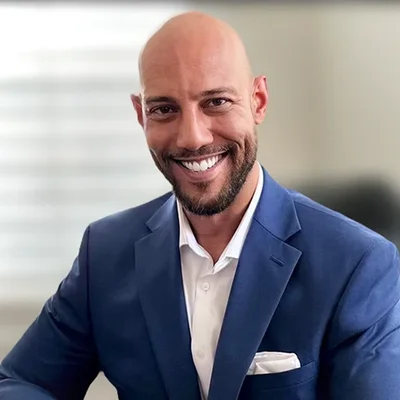
Stephen Ventura founded Full Percent in Boca Raton, Florida. He has built email systems since 1997 and SMS platforms since before the iPhone. stephenventura.com